
In software development, the way we do planning plays a crucial role in determining the success or failure of a project or product. It’s a dance between trying to foresee every possible scenario and being agile enough to navigate uncertainties as they pop up. On a high level, two primary approaches dominate this landscape: preventive planning and corrective planning. While classical project management methodologies often favor preventive planning, the agile movement has brought corrective planning to the forefront, emphasizing adaptability and responsiveness.

Creating a clean library that has proper symbol visibility and installation instructions might sound difficult. However with CMake it is relatively straight forward to set up, even if there are a few things to consider. Actually creating creating a library is as simple as invoking the add_library() command and adding the sources to it. When it comes to setting up the installation instructions and symbol visibility properly there is a bit more to it. There are also some small, but useful things like defining the version compatibility of the library that make the life of developers a lot easier if done properly.

LLMs and AI make software development harder. Wait, what? Isn’t the whole point of AI to make writing code easier? Well, yes. But writing code is the easy part of software development. The hard part is understanding the problem, designing business logic and debugging tough bugs. And that’s where AI code assistants like copilot or chatgpt make our job harder, as they strip a way the easy parts of our job and only leave us with the hard parts and make it harder for new developers to master the craft of software development.

Empowering Teams is a key aspect to create high-performing teams in an agile setting. Ever since Extreme Programming was introduced into the world of software development this statement or a variety of it has been carried over to almost all agile frameworks. And there is a multitude of articles about how to create them. But what does “empowered” exactly mean? What are the minimum powers that a team needs to be able to be agile?
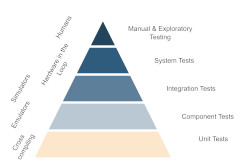
“Testing our software is difficult, because of the hardware involved”, is a common sentence when developing software for a specific hardware platform. Testing software that interacts closely with hardware indeed complicates the testing setup and in turn, often means that additional cost and effort are required. As the range of “embedded software” goes from low-level firmware running on a specific chip to software running on a specifically designed operating system with custom peripherals there is no one-size-fits-all solution to this. However, there are some strategies and principles that can help to make testing when easier and more effective.
CMake presets are arguably one of the biggest improvements in CMake since the introduction of targets in 2014. In a nutshell, CMake presets contain information on how to configure, build, test and package a CMake project and they are a tremendous help when managing different configurations for various compilers and platforms. Instead of fiddling with various command-line options, presets are stored in a JSON file and can be used to configure CMake with a single command. This article shows how to set up and organize and use them so they are most effective and easy to maintain.
If you build GUI applications with C++ and Qt, chances are that you have to create a mobile version of it. While the discussion, if Qt and C++ or the native Android SDK is the right technology to use is certainly worth a tought, there are situations where it makes sense to stick with Qt and C++. This article illustrates line by line how to build a C++/Qt application for android with CMake and how to pack it into an android APK.
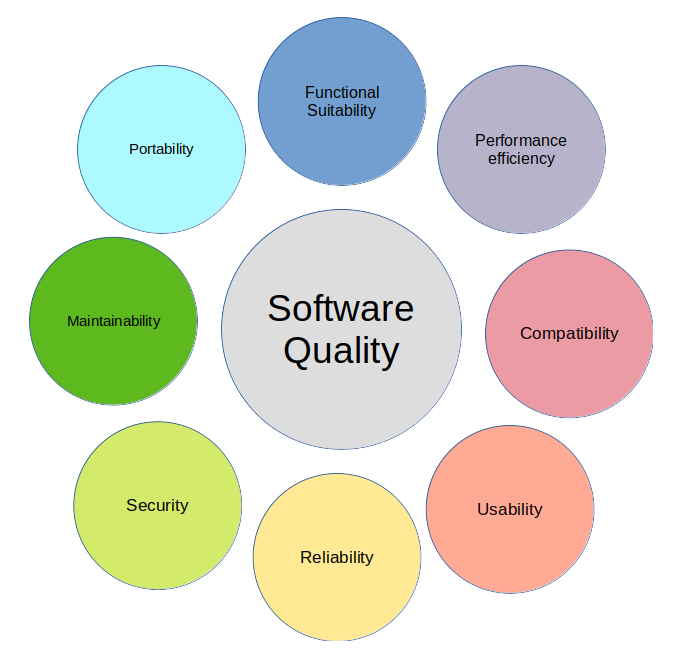
“We really struggle to bring engineering topics into the roadmap! When do we finally get the time to improve our code quality?” Many software development teams gripe when it comes to getting engineering topics into a product roadmap. For many, improving the lesser visible aspects of software quality comes second putting more features into a product. Nevertheless, creating quality software is a necessity if products are expected to perform on the market and be developed for a long time. The ISO 25010 model for software quality lays a good foundation to discuss the quality topic with the relevant stakeholders and with a few easy-to-learn tools putting features that improve the quality into a backlog becomes much easier.
When Packt Publishing approached me in august 2021 with the idea of writing a book about CMake, I immediately was all for it. Ten months later I am mightily proud that “CMake Best Practices” finally hit the shelves. As this would be my first book, I had no idea what I was getting into when I signed the contract with Packt. The months of writing the book were among the most exhausting ones in my whole career and they were an emotional rollercoaster, but I also count them as one of my most valuable experiences. And finally seeing the book getting the first customer reviews really rocks. So how is it to write a book for Packt as a first-time author? In this article, I try to give a few insights into my writing journey.

When planning a climbing trip the goal of reaching the summit is often known, but how tough it really is to get up there is something that can only be judged in detail once the climbing starts. Some mountains look almost impossible to climb and yet they are relatively easy to summit, while others look comparatively tame but require quite some effort to get up to. Starting a software project is often very similar. While there might be a general idea of what problem or business case the software should solve, it is often unclear what is needed to get there. Some things might turn out much harder than anticipated, while others will be solved surprisingly quick.