
How does remote teamwork actually work? Working together remotely has its challenges, but they are not as big as one might think from the cozy office of a co-located team. While the communication bandwidth of physical face-to-face communication still beats everything else, but modern technology and a few rules for online behavior can make up for a lot.
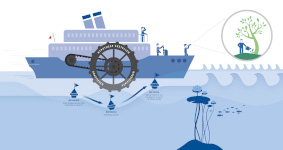
Change is everywhere in modern organizations. Those organizations that find it easy to change succeed, the others suffer. Life in modern companies is signified by fast and frequent changes. Be it agile transformations, digitalization, new tools, new technology, new methods, new processes (and much more) - there are are many powerful drivers for change in a modern VUCA-World The stories of painful and failed change are abundant, yet there are organizations that successfully change frequently without all the pain. What makes their changes much more likely to succeed? And how make they change appear easy? Together with colleagues at bbv Software Services we dove into the topic and we came up with seven major factors that contribute to successful and lightweight change.
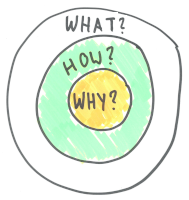
A good part of leadership is to bring inspiration and purpose to people in order to motivate them do get things done. In modern companies job no longer falls to a single boss-leader, but situational, decentralized leadership is the way to go. In essence “whoever knows best” leads the way. In the book Start with Why and a TED talk, the author Simon Sinek describes what he calls the “golden circle” as a model to create purpose and inspiration. In the tiniest nutshell the method consists of three concentric rings, “Why” (innermost), “How” and “What” (outermost) and these questions get answered inside out.

“We only learn through failure. This quote attributed to the legendary alpinist Reinhold Messner holds a lot of truth in it. Modern organizations like to talk about good failure culture, but is a failure in every circumstance a good thing? Probably not. As a software engineer and climber, I saw a few failures with sometimes quite drastic consequences. Failure is never the goal but sometimes unavoidable, so how can we as individuals, teams, and companies benefit from it?

What is your organizations currency of getting things done? When trying to getting things outside daily business done, every organization reacts to different kind of arguments and incentives. “Paying” in the right kind of arguments is often the key to get ones concerns put into action.

99.9% der Softwarefehler werden von Programmierer verursacht. Testen und Code Reviews helfen zwar, sind aber nicht immer genug. Viel schöner wäre es, wenn ich als Programmierer eine falsche Verwendung meines Codes von vornherein Abfangen könnte. Mit “Design by Contract” kriegen wir Softwareingenieure ein Werkzeug für genau diesen Zweck in die Hände. Programmcode wird durch “Design by Contract” aber nicht nur korrekter, sondern auch lesbarer und somit wartbarer. Und nicht zuletzt wird mit diesem Werkzeug Code auch robuster gegenüber Regressionsfehler. Einige Programmiersprachen kennen das Konzept bereits als natürliche Spracheigenschaft1, aber auch wenn dies nicht der Fall ist, lässt sich die Unterstützung für “Contracts” leicht einbauen.

CMake can be hard to figure out. I love CMake, but unfortunately, its documentation is more focused on completeness than on providing hands-on-examples. Since I found it hard to find a comprehensive example of how a header-only library can be set up, I decided to provide an example of a CMakeLists.txt file for such a library here and analyze it line by line. The example is taken from SI, a header-only library that provides strongly typed physical units. In order to keep the CMake file as small as possible, a few possible optimizations are omitted. Notably, I stripped any information relating to testing out of the project.

Are modern organizations ready to pay the price for increased demand for their leaders? Countless companies and organizations are currently changing how they work internally. Some experience a growth spurt in the wake of digitalization, others want to be more flexible in reacting to change. And a lot of these organizations struggle with these transformations. They got the agile framework of their choosing in place, they got the teams set up and maybe they even streamlined their portfolio and technological infrastructure. At first, everything looks good, but after a while, all the shiny new things start to lose their gleam and things become tedious again. Decisions take ages to be put into action and once a course is set, people find it hard to deviate from it. All the fluffy stuff like empowerment of the teams and people somehow does not seem to happen. These symptoms might hint that an organization is suffering from “leadership debt”.

Scrum is hard and tedious! It’s like groundhog day for software projects! Ever noticed that scrum does the same thing over and over again? Plannings, retrospectives, dailies, backlog refinements… Each sprint we do the same thing! Especially for long running projects this becomes boring. Programmers follow the Don’t repeat yourself paradigm, so why we do differently in processes? There has to be room to optimize, right? There is a solution to it: Scaled Single Sprint Scrum - It’s like scrum but totally different!

SAFe is the worst implementation of “corporate agile” that is out there! Over the last few months I heard this sentence or a variety of it a few times. There is some truth to it, but it is not the whole truth. The SAFe-framework is far away from what I imagine when thinking “agile”, but there are some aspects which are pretty neat. Despite all the critics it is a very popular framework that is implemented in a lot of bigger companies. So there has to be something good in it, doesn’t it? Let’s have a more differentiated look at it!