
SAFe is the worst implementation of “corporate agile” that is out there! Over the last few months I heard this sentence or a variety of it a few times. There is some truth to it, but it is not the whole truth. The SAFe-framework is far away from what I imagine when thinking “agile”, but there are some aspects which are pretty neat. Despite all the critics it is a very popular framework that is implemented in a lot of bigger companies. So there has to be something good in it, doesn’t it? Let’s have a more differentiated look at it!

A good product vision is the cornerstone for being successful at delivering software products1. Having a product vision that is tangible and accepted by your developers is one of the most important things to have, if teams are supposed to work in an empowered and self-organized way. A vision is not just a good advertising tool, but it is the foundation to creating a purpose for everyone’s alignment towards what the product shall be. It is a common pattern, that companies that struggle with creating good product or company visions, find it very hard to create alignment and motivation in those employees who are building and delivering their products.
-
Actually this is true for any product in development, not just software. ↩

Most hobby projects die at the idea stage - Mine do not. A while ago I decided to revive an old idea of mine to implement the International System of Units as a strongly typed C++ library. In order to try to bring this project forward I tried an experiment: I would make at least one commit each workday for a month. A month later I am somewhat proud to say, that I kept this promise to myself with only one “comittless” day. But how does my pet project look now?

How good are your decisions? - Every day we decide a lot of things small and big. At work or any professional setting we often have clear deciders. This can be a senior subject matter expert, the traditional “boss” or some collaborative process in an empowered team - it does not really matter. Contrary to our private live, in business we often have to make decisions more explicit and documented, for instance in the form of meeting minutes. Some people are good at deciding, others find it very hard.
Die neuen Standards haben die Programmiersprache C++ merklich modernisiert und teilweise ganz neue Programmierparadigmen in die Welt von C++ eingebracht. Die “grossen” Änderungen wie Variadic Templates, auto, Move-Semantik, Lambda-Ausdrücke und weitere haben für viel Diskussionsstoff gesorgt und sind dementsprechend weit herum bekannt. Nebst den Sprachfeatures hat auch die Standard-Bibliothek eine merkliche Erweiterung erfahren und viele Konzepte aus Bibliotheken wie boost wurden so Standardisiert. Nebst diesen sehr spürbaren (und teilweise auch umstrittenen) Features gibt es eine ganze Menge an kleinen-aber-feinen Spracherweiterungen die oft weniger bekannt sind oder übersehen werden.

“It is really demotivating, nothing gets done here.” A complaint I heard a few times in various settings. Sometimes just as a exclamation to vent steam, sometimes with a sigh and an edge of desperation to it. Surprisingly most of the time I hear this, it is from people that I esteem as far from lazy and quite capable of actually doing and completing things. But lack of motivation can strike the best of us.
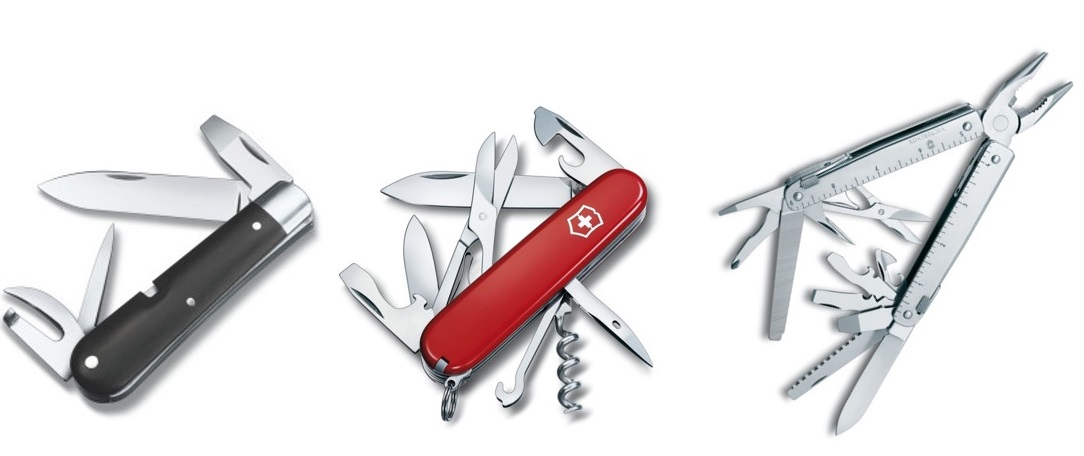
Iterate fast and often to make better products. This rings true not just when creating software but also when developing it close to or together with hardware. IoT and fully automated Industry 4.0 are currently big topics in the industry, which promotes integrated development between hardware and software even more. Unfortunately, the reality is often that software- and hardware-engineers fail to work effectively together and because of this struggle with creating awesome products.
Unpacking a fixed-size container in C++ can be tedious, and require you to fiddle around with std::get or std::tie. But not anymore, thanks to the new structured bindings introduced in C++17. Unpacking anything with a fixed size into named variables never has been easier.
Agile is successful and we know it. For years we scrum masters, agile coaches and change champions advertised and trained developers in the agile principles and the many frameworks and ideas out there. We have seen teams and individuals grow and become self-organized and empowered. It was fun but tough work. We grass-rooted ideas with the developers and helped people changing their minds about “how we work”. And it was frustrating when we hit the hard wall of culture-shifting whole organizations instead of just teams. Our teams worked well but somehow the movers and shakers of the companies needed a lot more and a different kind of attention to bring them along. Suddenly the ideas and principles we instilled so successfully into cross-functional teams of developers, testers and engineers were under harsh critique. Somehow there always seemed a someone up a higher level that did not agree with what we tried to achieve. Countless stories of trying to put scrum into action on a contract that is essentially waterfall are a strong indicator to that.

Planning poker, magic estimation, T-shirt-size estimation and even the famed #NoEstiamtes are too inaccurate - But there is a way to estimate to up to 50% more accurately by using a simple formula based on empirical measures and applied linguistics. Notice how developers use the same qualifiers for estimating workload over and over again? “It is just a minor bugfix”, “This is a huge, complex task”, “There is absolutely no way I can put an estimate on this one”. Heard this sentences or variations of it in the past? Your best estimations are lying in front of you in plain sight.